
By Kirstie Vesseur, Registered Clinical Nutritionist (CNA), Legacy Nutrition, NZ and Australia.
Quick answer: Endometriosis affects around 1 in 10 women of reproductive age, and in New Zealand it now takes an average of almost 10 years to be diagnosed. No diet has been proven to treat endometriosis, and food will not remove it. The research on diet is still early and mostly small studies, but there are sensible, low-risk changes that may help some women feel better: a Mediterranean-style way of eating, oily fish, plenty of fibre and plants, less red and processed meat and alcohol, protecting your iron, and carefully structured food trials when gut symptoms are a big part of the picture.
Endometriosis takes far too long to diagnose. Women are told their pain is normal, that their periods are just bad, or that it is anxiety. A 2024 New Zealand study found the average wait for a diagnosis was 9.7 years.
I cannot change the diagnostic system. What I can do is give you an honest picture of what the research says about food and endometriosis, what is worth trying, and what is still hype.
What is endometriosis?
Endometriosis is when tissue similar to the lining of the uterus grows outside it, most often on the ovaries, fallopian tubes, bowel, bladder and pelvic lining. This tissue responds to your hormones and drives inflammation, pain, scarring and adhesions.
Common symptoms include:
Period pain that stops you doing normal things
Pain with sex, bowel movements or passing urine
Pelvic pain outside your period
Heavy or irregular bleeding
Bloating ("endo belly"), constipation or diarrhoea
Fatigue
Difficulty getting pregnant
Endometriosis is diagnosed by a specialist. International guidelines now support specialist ultrasound or MRI as part of the work-up, with laparoscopy used when scans are clear but symptoms continue, or when treatment has not helped. A normal scan does not rule endometriosis out. Nutrition works alongside your medical care, never instead of it, and you should not stop or change any prescribed treatment without talking to your doctor.
Why food might matter
Three processes overlap in endometriosis:
Inflammation: lesions produce prostaglandins and other inflammatory messengers that are linked to pain.
Oestrogen: endometriosis is oestrogen-dependent, and some lesions can make their own oestrogen.
Immune and gut: the immune system does not clear the misplaced tissue well, and gut symptoms are very common.
Here is the honest part. The European endometriosis guideline (ESHRE 2022) found the evidence too limited to recommend any specific diet for endometriosis pain. Most diet studies are small, short or have no comparison group. So think of the steps below as low-risk foundations that support your overall health, which you can test for yourself, rather than a treatment.
Start with a Mediterranean-style base
A Mediterranean-style pattern is the most reasonable foundation. Small studies have reported less pain in women with endometriosis who ate this way, although they did not include a comparison group. It also lines up with general healthy eating advice. In practice, that looks like:
Vegetables at lunch and dinner, filling about half your plate.
Legumes most days, such as half a cup of chickpeas, lentils or beans.
Extra virgin olive oil as your main cooking and dressing oil, around 1 to 2 tablespoons a day.
A small handful (about 30 g) of nuts or seeds daily, such as walnuts, almonds or pumpkin seeds.
Wholegrains such as oats, brown rice, quinoa or buckwheat.
Oily fish
In a large US study following tens of thousands of nurses, women with the highest intake of long-chain omega-3 fats had a 22% lower risk of being diagnosed with endometriosis, while those eating the most trans fats had a higher risk. This shows a link, not proof of cause. A small trial in young women found that a 1 g fish oil capsule did not reduce endometriosis pain more than a placebo, so food is the place to start.
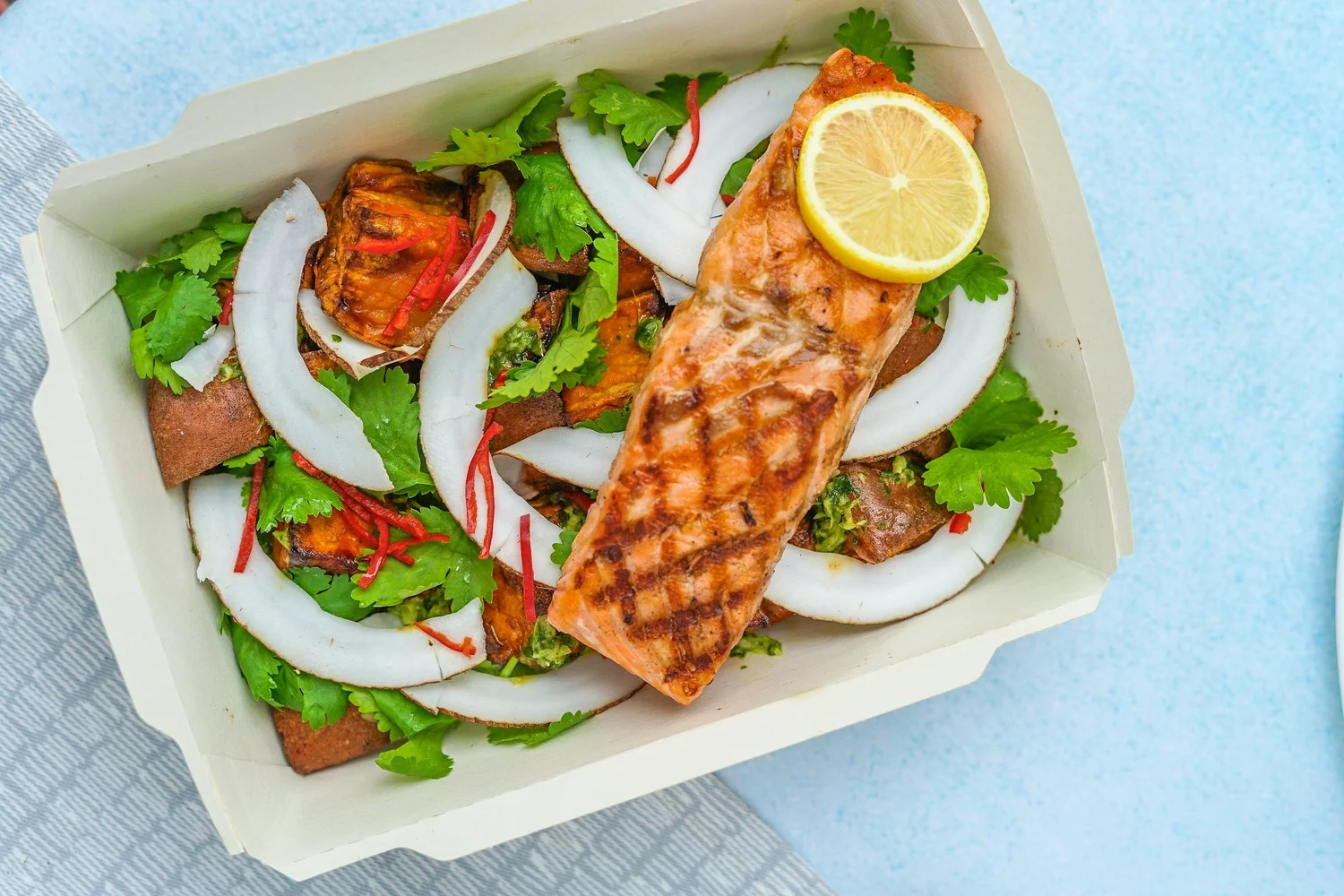
Eat oily fish such as salmon, sardines or mackerel 2 to 3 times a week (about 100 to 150 g a serve). Tinned fish counts.
Keep trans fats low by limiting deep-fried takeaways and commercial pastries and biscuits.
If you do not eat fish and want a supplement, around 1 g of combined EPA and DHA a day is a common dose and well within amounts considered safe for adults.
Less red and processed meat, and go easy on alcohol
A large cohort study found women eating more than two serves of red meat a day had a higher risk of endometriosis than women eating one serve a week or less. The link with alcohol is modest and less consistent. Lean red meat is still a useful source of iron, so the aim is moderation rather than cutting it out:
Keep red meat to roughly 350 to 500 g cooked a week, in line with cancer prevention advice, and processed meats such as ham, bacon and salami to occasional.
Keep alcohol low, or try a few alcohol-free cycles while you track your symptoms.
Fibre, your gut and oestrogen
Your liver packages up used oestrogen and your gut helps remove it. A few small studies suggest a higher-fibre diet may modestly lower circulating oestrogen. The evidence is limited, but fibre also supports your gut bacteria and regular bowel motions, which matter when endo belly is part of your day.
Aim for 25 to 30 g of fibre a day. The adequate intake for adult women in NZ and Australia is 25 g, with 28 g suggested for longer-term health.
An easy day: oats with 1 tablespoon of ground flaxseed and two kiwifruit, a lentil and vegetable soup at lunch, and a dinner plate half filled with vegetables.
Include cruciferous vegetables such as broccoli, cabbage, cauliflower and kale for overall health. Claims that they "detox" oestrogen go further than the human evidence.
Increase fibre slowly and drink more water, especially if you bloat easily.
Endo belly: bloating and bowel symptoms
Bowel symptoms are very common in endometriosis and often overlap with irritable bowel syndrome (IBS). In one retrospective study, 72% of women with endometriosis and IBS symptoms had more than a 50% improvement in gut symptoms after 4 weeks on a low FODMAP diet. That result was for bloating and bowel symptoms, not endometriosis pain itself.
Low FODMAP is a short elimination phase followed by careful reintroduction. It is not meant to be a forever diet, and it is best done with a nutritionist or dietitian so your diet stays varied and your fibre stays up. If bloating is your main issue, my article on why you might always be bloated is a good next read.
Is a gluten-free diet worth trying?
One Italian study reported that 75% of 207 women with endometriosis felt less pain after 12 months gluten-free. It had no comparison group and many women dropped out early, so it cannot tell us whether gluten was the cause. A 2023 review advised against going gluten-free for endometriosis alone without another reason. If you still want to test it:
Ask your GP about coeliac disease testing first, while you are still eating gluten. The test is not accurate once you have stopped.
Trial gluten-free eating for 8 to 12 weeks while tracking pain and bowel symptoms.
Use naturally gluten-free wholefoods such as rice, quinoa, buckwheat and potatoes rather than processed gluten-free products, so your fibre stays up.
Reintroduce gluten and watch what happens. Keep the change only if it clearly helps.
Key nutrients
Iron: heavy periods are a common cause of low iron. Ask your GP to check your ferritin and full blood count. Iron-rich foods include lean red meat, chicken thighs, mussels, lentils and tofu; pair plant sources with vitamin C foods such as capsicum or kiwifruit. Only take iron supplements if testing shows you need them. Read more in Why is my ferritin low?
Magnesium: there is some older evidence that magnesium eases ordinary period pain, but no trials in endometriosis specifically. Start with food: pumpkin seeds, almonds, leafy greens and legumes. If you supplement, magnesium glycinate providing up to 300 mg of elemental magnesium a day keeps you under the NZ and Australian upper limit of 350 mg a day from supplements.
Vitamin D: about 1 in 3 New Zealand adults were below the recommended vitamin D level in the 2008/09 national nutrition survey. Trials of vitamin D for endometriosis pain have not shown a clear or consistent benefit, but it still matters for bones and immunity. Ask your GP whether testing or a supplement suits you, especially over winter.
N-acetylcysteine (NAC): two small studies without placebo groups suggest NAC may reduce endometrioma (ovarian cyst) size and pain. This is early research, so discuss it with your specialist or practitioner rather than starting it yourself.
Check with your GP or pharmacist before starting any supplement if you take medication (including blood thinners or hormonal treatment), have kidney problems, or are pregnant or breastfeeding.
Lifestyle support
Movement: some women find walking, yoga or pelvic health physiotherapy helps them manage pain. Go at your own pace.
Sleep and stress: poor sleep and ongoing stress can make pain feel worse, so protect your sleep, especially around your period.
Track it: a simple symptom diary (pain, bloating, bowels, energy and cycle day) is the best way to see whether a change is helping you.
Frequently asked questions
Can diet cure endometriosis?
No. Diet cannot remove endometriosis lesions. Some changes may help with pain, bloating and energy alongside your medical treatment.
What is the best diet for endometriosis?
No diet has been proven to treat it. A Mediterranean-style pattern rich in vegetables, legumes, oily fish, olive oil and fibre is a sensible, low-risk foundation. Targeted trials such as low FODMAP are worth considering when gut symptoms are significant.
Does endometriosis affect fertility?
It can. The World Health Organization notes endometriosis is found in 25 to 50% of women with infertility. If you are planning a pregnancy, talk with your specialist early.
How long until I notice a difference?
Give any single change at least 2 to 3 cycles while keeping a symptom diary, so you can judge for yourself whether it is helping.
Keep reading
References
Endometriosis: fact sheet. World Health Organization, 2025. who.int
Ellis K, Wood R. A decade to wait: update on the average delay to diagnosis for endometriosis in Aotearoa New Zealand. Aust N Z J Obstet Gynaecol, 2024. PMC11660020
Becker CM et al. ESHRE guideline: endometriosis. Human Reproduction Open, 2022. doi.org/10.1093/hropen/hoac009
Nirgianakis K et al. Effectiveness of dietary interventions in the treatment of endometriosis: a systematic review. Reproductive Sciences, 2022. doi.org/10.1007/s43032-020-00418-w
Brouns F et al. Diet associations in endometriosis: a critical narrative assessment with special reference to gluten. Frontiers in Nutrition, 2023. doi.org/10.3389/fnut.2023.1166929
Nodler JL et al. Supplementation with vitamin D or ω-3 fatty acids in adolescent girls and young women with endometriosis (SAGE): a double-blind, randomized, placebo-controlled trial. Am J Clin Nutr, 2020. PMC7326593
Yamamoto A et al. A prospective cohort study of meat and fish consumption and endometriosis risk. Am J Obstet Gynecol, 2018. PMC6066416
Nutrient Reference Values for Australia and New Zealand: Magnesium. NHMRC and NZ Ministry of Health, 2006. eatforhealth.gov.au
Want help with this one-on-one? See how I work with women on women's hormone support, or browse all my services.
This article is general education, not personal medical advice. Please talk with your GP before starting supplements or changing medication.
